Wednesday, 30 August 2023
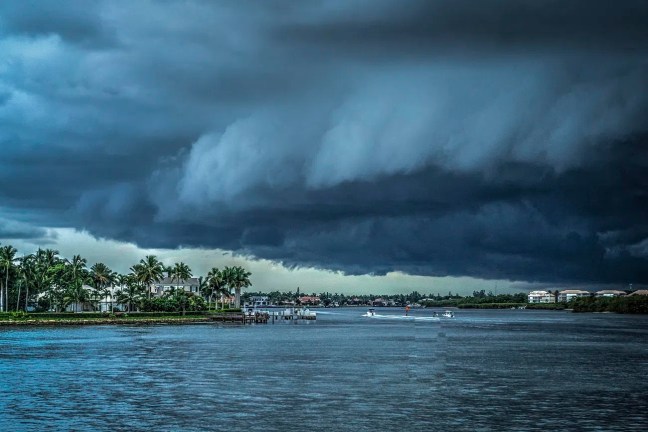
As I write this piece, Hurricane Idalia is approaching the Florida Big Bend as a Category 4 Hurricane. I am mentioning this right away because when an event of this magnitude happens, as a scholar in the emergency management field, everything around is on pause. I mean, not everything because work deadlines and tasks are still there, but the moment you have a break, your evenings, and even nights, are not free time anymore. They transform into opportunities to watch the news, keep any tab of your laptop open on an emergency management division website, and scroll social media for real-time updates. And let’s be real, even while you are reading or writing that paper, attending that meeting, TV channels are still broadcasting in the background.
If it does not sound familiar to you, you are either in a different field or in the wrong one. And let me be clear. I do not mean that since you are a scholar in the emergency management field, you have to give up on your free time or work-life balance. The opposite. It took me years before I found that balance and value in my free time. But I am also in this field because one thing is crystal clear to me: I want my research to have an impact and help people during their most difficult times, i.e., when going through emergencies. Unfortunately, emergencies can happen at any time. They do not know weekends or nights. In other words, they are not a 9 to 5 or Monday through Friday job. And if we stay true to the motivations that brought us into this field, we know that sometimes, our work can also go beyond that schedule.
Because of the nature of our field, we are constantly exposed to catastrophes, death toll counts, images, and stories that are far from being pleasant. We often travel to post-disaster locations, interview people who have lost everything because of an extreme weather event, and often go through a disaster ourselves. For example, this was the case for me in September 2022 when Hurricane Ian impacted Florida while I was completing my last semester in the doctoral program I graduated from at the University of Central Florida. Ian was the first hurricane to hit Florida with such a magnitude while I was living there. On that occasion, I was both one of the people I wanted to help with my work, but also, one of the researchers having a first-hand experience in the pre- during, and post-disaster. Was it easy managing all of that? Of course, it was not. Ian disrupted several academic activities and just a couple of months later, I had to reschedule my dissertation defense of a few days because Hurricane Nicole hit Florida. Someone back then told me “Sara, hurricanes are going after you, because you study them!” and well, now with a smile I can say, I guess they were right!
But the point is that Hurricane Ian, and Hurricane Nicole, just showed me how important my research is. What kind of impact my research can have, and how important it is to have a work-life balance and free time. This is because sometimes, I have to give up on them to make sure I am attentive to what is happening, can collect time-sensitive data, and inform a variety of stakeholders about lessons we can learn from the past to improve the future of emergency management. And there is something I want to stress here: Anyone in this field, from climate to disaster scientists, from emergency management to public policy experts, has to take care of themselves. We are working on phenomena that are bigger than all of us together. We deal with news and issues that can have a strong impact on our mental and even physical well-being. But we are also working in such a relevant arena that our work is important now more than ever.
If I can give to all of you in this field my two cents which do not substitute any professional advice as they are based on my experience, these are my three points. The first one is: Pause, breathe. Recognize when it is time to stop. It is not a weakness, it is a sign of strength and self-reflection that can only be beneficial for the present and future you, you as a person, you as a professional. The second one is to find in your peers your strength. All of us in this field share similar experiences. Talk to your colleagues, go out with them, and collaborate with them. You will be surprised how open and welcoming is the emergency management community of scholars (and practitioners!). The third one is to surround yourself with people who understand what you do. And if they do not, sit down, and explain that to them. Family and friends are often in different fields and may not understand why you are on the news channel at two in the morning on a Wednesday night to follow what is going on with Hurricane Idalia. Make sure you explain to them why it is important for you and your work. Make sure they understand that if you want to get that rapid grant sometimes you have to work over the weekend, but you will take a couple of days off the week that follows to spend them together. It is all a matter of balance. And nerves. Because yes, to be in this field, you have to have nerves and passion.
To all my emergency management scholars and practitioners, thank you. Thank you for making this field one of the most exciting to work within. Thank you for your endless dedication and commitment to the communities we serve.
Sara Belligoni
Featured Image Credits: Photo by Raw Pixel
 SARA BELLIGONI, Ph. D.