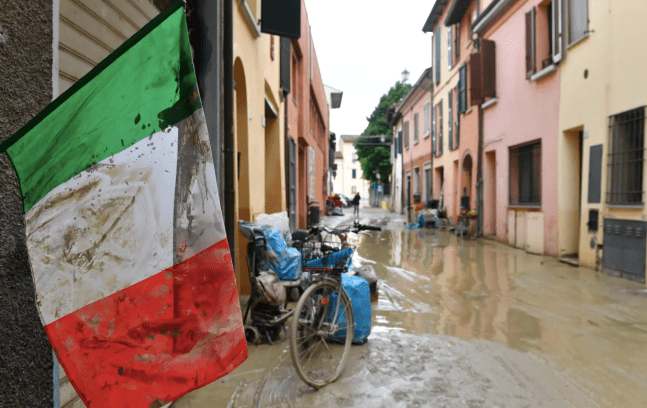
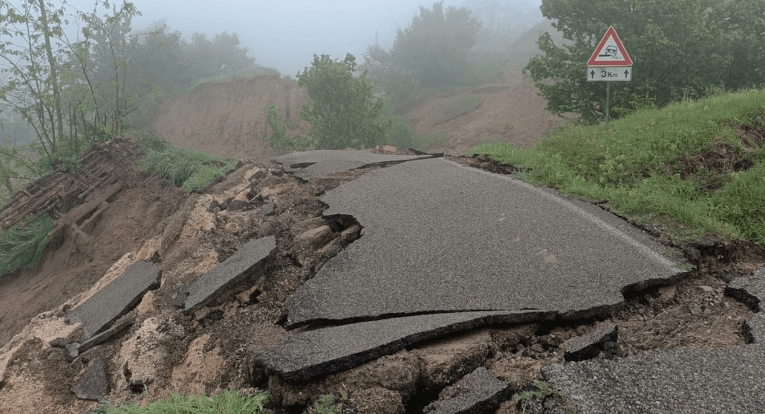
On 18 May 2023, the region of Emilia Romagna, in Italy, was affected by severe flooding. 14 people lost their lives while thousands remained homeless, and others were trapped on the top floors of their houses until the waters receded or were rescued by first responders (NYT, 2023).
As an Italian and an expert in disaster management, this is heartbreaking.
Every time a disaster occurs in my country is heartbreaking. It was the earthquake of Amatrice in 2016 and the COVID-19 pandemic in 2020. Living abroad makes me feel powerless. As a researcher that spends more time in the field than behind a desk, my natural inclination is to go where a disaster strikes. However, there is still something I can do from overseas, and it is talking about one of the main problems I see occurring over and over within the emergency management system in Italy: The lack of an early warning system.
According to the United Nations International Strategy for Disaster Reduction (UNISDR), an early warning system is “The set of capacities needed to generate and disseminate timely and meaningful warning information to enable individuals, communities, and organizations threatened by a hazard to prepare and to act appropriately and in sufficient time to reduce the possibility of harm or loss” (UNISDR, 2012).
The definition suggests how an early warning system can play a crucial role in disaster preparedness as it can save lives. It can ensure that preliminary steps for an effective response can be put in place by the emergency management machine.
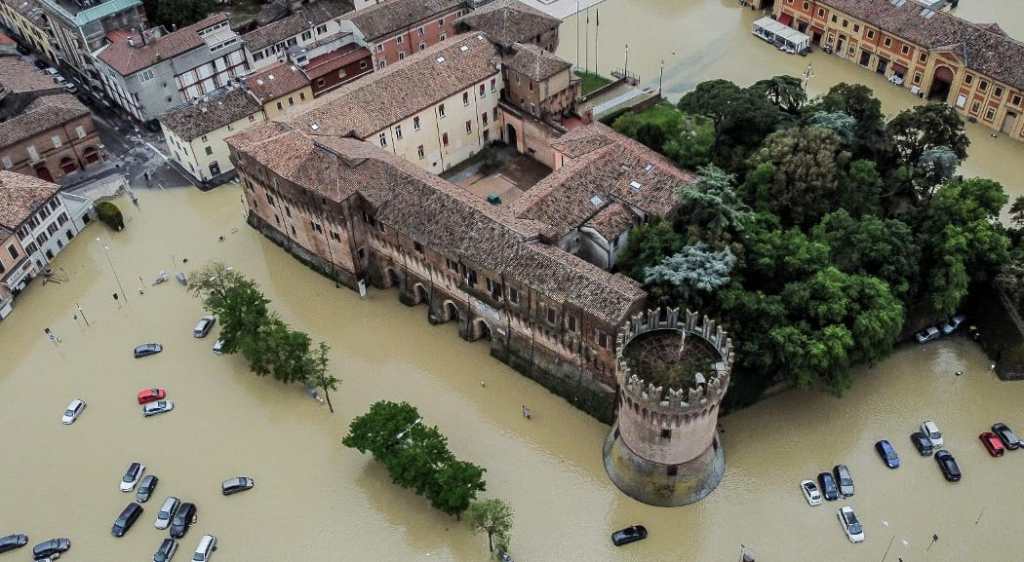
Unfortunately, in the last few days, I have been reading the news and watching videos of what happened in Emilia Romagna, and all I could hear from the people affected by the flooding was, “Avrebbero dovuto avvertirci!” – “They should have alerted us!” which made me think of how it is possible that in Italy, a country subject to a variety of natural hazards aggravated by hydrological instability (see my piece about it here), there is no EWS.
Perhaps, I have an answer: In Italy, there is still too much focus on the ’emergency response’ rather than what comes before that, including preparedness. This makes EWSs failing within the overlooked preparedness phase and motivates my interest in looking more into the experimental launch of IT Alert and why and how EWSs are an urgent priority for the Italian Government and the Dipartimento della Protezione Civile – Department of Civil Protection.
IT Alert is an EWS developed by the Department of Civil Protection in collaboration with Fondazione di Ricerca CIMA – CIMA Research Foundation. The EWS intends to disseminate warning communication in cases of imminent hazards or ongoing emergencies. The warning is issued in conformity with the international standard Common Alerting Protocol (CAP) and targets the population in a specific location. The warning communication is often sent to mobile phones via text messages or apps thanks to passively collected location data. Additionally, these communications can be issued on television with the intent of ensuring that the majority of the population, besides their demographics and socioeconomic status, can receive the warnings.
However, despite the regulations about EWSs in Europe dating back to 1972 (Directive UE 2018/1972), Italy’s first legislative decree on this is in 2019. In June 2020, the Prime Minister issued another decree to further the regulation and activation of IT Alert while creating a technical body for developing, implementing, and monitoring the EWS. 1 October 2020 is when the experimental period of 24 months e started. The latest norm of 7 February 2023, issued by the Minister for the Civil Protection and Sea Policies, extended the experimentation until 13 February 2024, passing it from 24 to over 40 months.
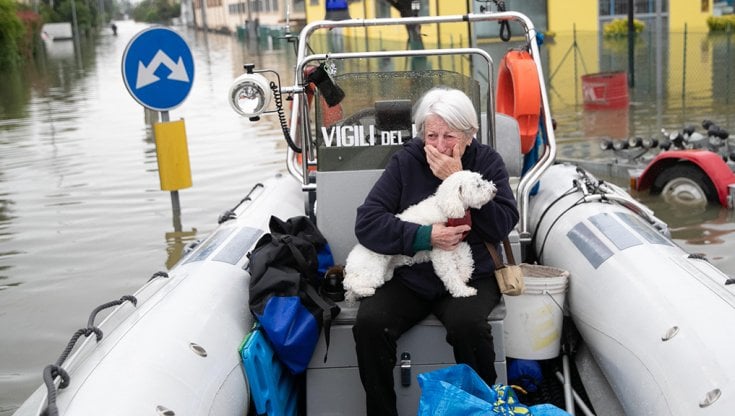
Despite there may be good reasons related to cybersecurity and the creation of effective contents of the messages for the extension of the experimental period, the EWS should become one of the top priorities for the Italian Government and emergency management system given its lateness but also the potential impact in strengthening communities’ resilience to disasters.
Many solutions could be implemented in the meantime. For example, ensuring that television, still one of the primary means of communication in Italy, could play a key role in issuing communications about imminent hazards. This would also support first responders and law enforcement that in the last few days, is playing the role of human-EWS, physically driving around and via speakers, alerting the population of an imminent hazard.
If Italy was the first Western country to deal with the COVID-19 pandemic and went the extra length to ensure effective management of the public health emergency from which other countries ‘learned,’ Italy is also not one of the first trying to develop an EWS. Indeed, several countries have their own EWS. Perfect? Probably not, but they are effective, and they are largely used in case of imminent hazards and ongoing emergencies. For example, in the United States, the EWS takes several forms including the well-known text message alerts sent by either the city or county officials, alerting the population about a ‘watch,’ a ‘warning,’ or ongoing crisis updates (here is a good explanation of the difference between a ‘watch’ and a ‘warning’ from the U.S. Weather Service). Long story short, there are several EWSs already in place from which Italy could take an example and seek opportunities for collaboration and research partnerships.
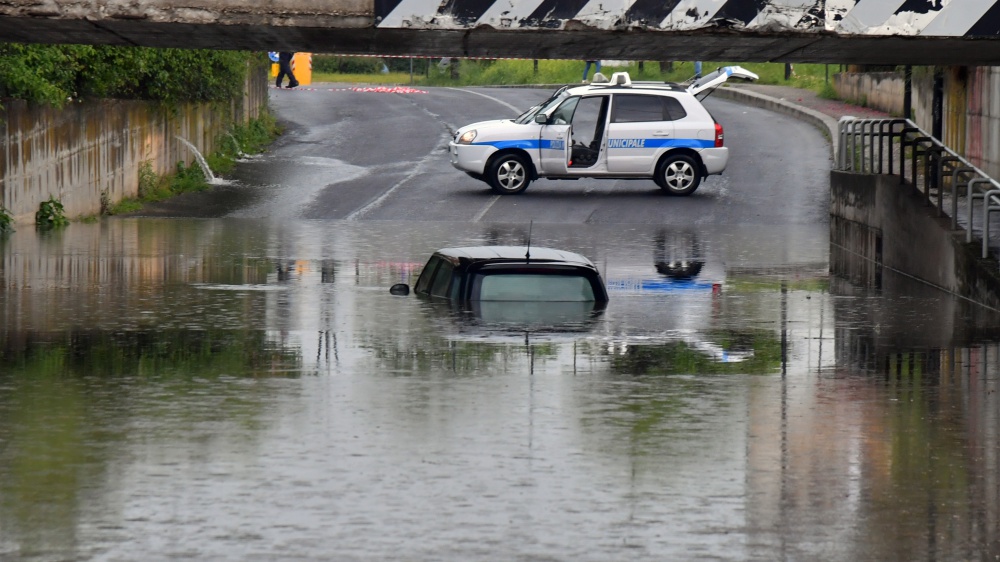
In summary, among the reasons why we do not have an effective EWS in Italy (yet) is that for too long, the attention was given to the response phase of the emergency management cycle whose phases, mitigation/adaptation, preparedness, response, and recovery, are strictly interconnected. The changing environment in which we live, not only in Italy but on a global scale, is making a shift in this posture a priority.
Climate change, which no one can neglect anymore given the evident effects on people’s everyday life, is changing the characteristics of weather events if compared to what we are historically used to. In the Atlantic, storms are more likely to become hurricanes whose destruction comes from the rain and the wind, while for decades, the wind was considered their major destructive force (I am working on a study focused on this, more will come soon).
In the Mediterranean region, cyclones are intensifying, and with a rapid increase in the temperature of the Mediterranean Sea, we should expect an increase in the cyclones’ rainfall in a region that is already suffering from the loss of coastal areas due to sea-level rise. Additionally, climate change effects on the weather are making these extreme weather events occur more frequently, which is another main reason why we cannot focus on ‘responding’ anymore because we will find ourselves involved in more and more ‘responses’ that will overlap (which means, shrinking our financial and human resources).
For these reasons, the more we work towards climate adaptation and mitigation and prioritize the development of preparedness measures, such as EWS, the better prepared we will arrive at the response phase and the earlier we will recover.[1] [2]
This is an analytical piece that wants to challenge the Italian Government and emergency management system in shifting their mindset, prioritize the implementation of an effective EWS and why not, starting to collaborate with those ‘Italian brains’ from abroad who are pawing to help our country even if it means to do so from overseas.
My final remarks go to the people of Emilia Romagna and the first responders that from days and with little resources, are doing great things demonstrating the character of the Italian population, whose resilience should not be used by the Italian Government as an excuse for not taking action.
—
[1] Mann, M. E., & Emanuel, K. A. (2006). Atlantic hurricane trends linked to climate change. Eos, Transactions American Geophysical Union, 87(24), 233-241.
[2] Lionello, P., Abrantes, F., Gacic, M., Planton, S., Trigo, R., & Ulbrich, U. (2014). The climate of the Mediterranean region: research progress and climate change impacts. Regional Environmental Change, 14, 1679-1684.
Sara Belligoni
Featured Image Credits: REUTERS/Jennifer Lorenzini
 SARA BELLIGONI, Ph. D.
You must be logged in to post a comment.